

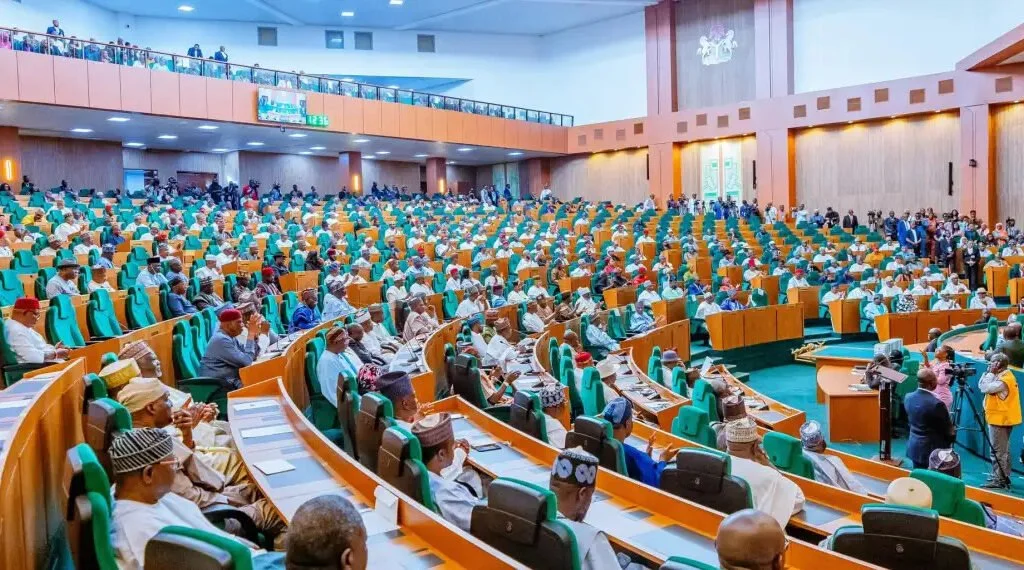
A tense atmosphere gripped the House of Representatives on Tuesday as federal lawmakers abruptly adjourned plenary amid deepening disagreements over the 2026 budget and welfare concerns. The session, which ended without addressing a single item on the Order Paper, underscored the widening rift between members and the leadership over fiscal priorities and internal financial challenges.
The abrupt adjournment, reminiscent of sessions only suspended to honour deceased colleagues, sparked speculation of serious divisions among members. Heated exchanges reportedly occurred during a closed-door session that lasted over an hour before the adjournment motion was moved by House Leader Prof. Julius Ihonvbere.
Budget Dispute and Borrowing Request
At the heart of the tension is President Bola Tinubu’s request for the National Assembly’s approval to borrow ₦1.15 trillion to fund the 2025 budget deficit. The President’s letter, read last week by Deputy Speaker Benjamin Kalu, sought approval for domestic borrowing to cover a ₦14.10 trillion funding gap created by an expanded ₦59.99 trillion budget.
Despite expectations from the Presidency that the House would approve the request on Tuesday, lawmakers reportedly resisted the move, citing unfulfilled financial commitments, including unpaid constituency and capital project funds.
Sources within the chamber revealed that the closed-door session focused on the expiration of a one-week ultimatum issued to the Ministers of Finance, Budget and National Planning, and the Accountant General of the Federation to offset debts owed to indigenous contractors. Lawmakers expressed anger that the executive had not complied with the directive.
Discontent Over Welfare and House Management
The tension escalated when Hon. Ifeanyi Uzokwe from Anambra State repeatedly sought recognition to raise a point of order, which the Speaker, Rt. Hon. Tajudeen Abbas, ignored. His persistence led to further disruptions before the House abruptly adjourned.
Adding to the unease was a leaked message from Hon. Ismaila Dabo of Bauchi State, who, in a WhatsApp group message titled “My Concern and the Sad Reality About the 10th National Assembly,” lamented the financial plight of members despite significant budget increases for the legislature.
Dabo revealed that although the National Assembly’s budget had grown from less than ₦160 billion to about ₦360 billion in recent years, most members were struggling financially. According to him, many could not pay their rents, travel to their constituencies, or meet loan obligations, with some being pursued by moneylenders.
He also criticized the Speaker’s leadership for creating too many standing committees, which he said weakened oversight effectiveness and caused duplication of legislative functions. “We have become ineffective before ministries, departments, and agencies,” he lamented, warning that if not addressed, the 10th Assembly might become “the weakest in Nigeria’s democratic history.”
Call for Reform and Financial Adjustment
Dabo further decried what he described as the “alarming disparity” between the budgetary allocations of principal officers and regular members. He cited instances where principal officers controlled project portfolios worth over ₦50 billion while others barely managed ₦1.1 billion—often unfunded.
He proposed a review of members’ monthly allowances from ₦12.5 million to ₦30 million, arguing that the adjustment was both realistic and necessary to maintain legislative efficiency and dignity.
Additionally, he urged Speaker Abbas to rationalize the number of standing committees and ensure equitable distribution of budgetary provisions to strengthen members’ relevance and restore the Assembly’s integrity.
Leadership Response and Fallout
Following the viral message, House spokesman Hon. Akin Rotimi, who administers the WhatsApp group, reportedly deleted Dabo’s post. However, it resurfaced on other platforms, igniting further debate among members.
In response, Speaker Abbas denied allegations of budget diversion, explaining that the increase in the National Assembly’s allocation was spent on capital projects such as the construction of car parks, a new recreation centre, and improvements to the National Assembly Hospital.
Some lawmakers, however, criticized the spending priorities, questioning the purchase of standing fans and dustbins from the ₦120 billion capital allocation instead of improving members’ running costs.
Efforts by journalists to obtain official comments from Hon. Rotimi and Hon. Amos Daniel, Chairman of the House Services Committee, were unsuccessful at the time of filing this report.
As the House reconvenes today, expectations remain high that the contentious ₦1.15 trillion borrowing request and the welfare grievances will dominate discussions, testing the unity and resolve of Nigeria’s 10th National Assembly.

