
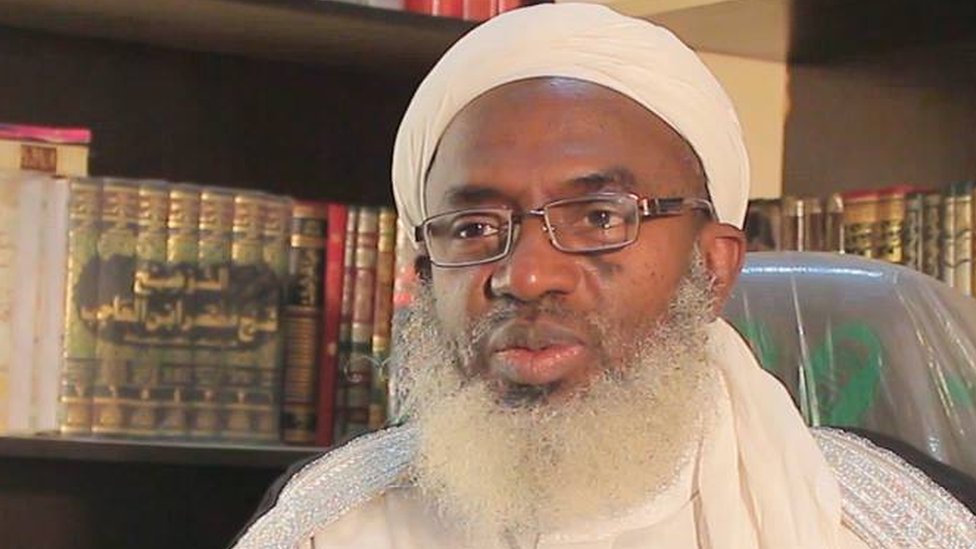
The United States Congress is considering a new bill that could impose visa bans, asset freezes, and financial restrictions on several Nigerian officials, including 12 northern governors, judges, traditional rulers, and prominent Islamic cleric Sheikh Ahmad Gumi.
The proposed legislation accuses these officials of “promoting, enacting, or maintaining blasphemy laws” and “tolerating religious violence,” marking a major escalation in Washington’s scrutiny of religious freedom in Nigeria.
What the US Bill Proposes
Under the proposed law, the US Secretary of State would be required to identify and report, within 90 days of the bill’s passage, any Nigerian official linked to religious persecution or blasphemy-related violence. Those named could face travel bans, asset seizures, and restrictions under Executive Order 13818, which forms part of the Global Magnitsky Human Rights Accountability Act.
The law would apply retrospectively — covering offenses committed within the past ten years — and mandate annual reporting to ensure ongoing accountability.
Specifically, the bill targets judges, magistrates, prison officers, and law enforcement officials who have enforced or supported blasphemy laws through prosecution, conviction, or imprisonment.
States Under Scrutiny
The bill identifies 12 northern states — Zamfara, Kano, Sokoto, Katsina, Bauchi, Borno, Jigawa, Kebbi, Yobe, Kaduna, Niger, and Gombe — as regions where Sharia law has been expanded since 1999 to include criminal and public morality provisions.
US lawmakers argue that these laws discriminate against Christians and minority groups and promote “a culture of impunity” surrounding mob justice and religious intolerance.
Background: Rise of Sharia Law and Blasphemy Controversies
Sharia, derived from Islamic jurisprudence, has long served as a moral and social code among Muslims in northern Nigeria. However, between 1999 and 2000, several northern states — beginning with Zamfara under Governor Ahmad Sani Yerima — extended Sharia’s jurisdiction to cover criminal law.
Within two years, 12 states had adopted Sharia-based penal codes, operating parallel court systems alongside Nigeria’s secular judiciary.
The US concern follows a string of high-profile blasphemy-related cases and mob killings, including:
-
Mubarak Bala, a humanist jailed in Kano,
-
Yahaya Sharif, a singer sentenced to death,
-
Sheikh Abduljabbar Kabara, also in Kano,
-
Deborah Samuel and Usman Buda in Sokoto,
-
Roda Jatau and Yunusa the water seller in Bauchi,
-
Christina Oluwatoyin in Gombe,
-
Sadik Mani in Katsina, and
-
Amaye the food vendor in Niger State.
While some victims remain imprisoned, others were lynched by mobs over allegations of blasphemy.
Human rights organizations including Amnesty International and Humanists International have repeatedly condemned these acts, calling for Nigeria to abolish blasphemy laws and strengthen protections for freedom of religion and expression.
Sheikh Gumi Reacts From Turkey
Islamic cleric Sheikh Ahmad Gumi, one of those reportedly affected by the proposed sanctions, has downplayed the development, saying he is “not surprised” by Washington’s move.
In a phone interview with Daily Post Nigeria from Turkey on Tuesday, Gumi said he had not received any official notice but would not be shocked if his name appeared on the sanctions list.
“Well, I didn’t even know they mentioned my name. I haven’t seen it in the papers, and no one has communicated it to me. But it’s not surprising. Anyone who speaks against cutting ties with America, of course, they wouldn’t like him. May God protect us,” he said.
In a live broadcast from the Haifa Mosque in Sofia, Turkey, Gumi urged Muslims and Christians to live peacefully, describing the US sanctions threat as “a distraction.”
“Let us live in peace. If we live peacefully, the evil plans of the West will not succeed against us. Do not worry about their noise. Allah will not grant them victory. It is not by killing Christians or insulting them; they are our partners in nation building,” he said.
The cleric also used the historic mosque — once a church — as an example of religious coexistence, emphasizing that “peace, not conflict, should define human relationships.”
Governors and Officials Remain Silent
As of press time, none of the governors from the 12 affected states had issued an official response to the proposed US sanctions. Efforts by Daily Post to reach their spokesmen were unsuccessful.
Analysts note that if the bill is passed by the US Congress and signed by the President of the United States, it would mark the first time Washington has formally sanctioned Nigerian public officials over religious freedom violations.
For now, the legislation awaits full congressional approval, and debates continue on Capitol Hill over the balance between diplomacy, religious rights, and sovereignty in U.S.-Nigeria relations.

